

You may be wondering why you feel hungry again just hours after finishing that instant noodle meal or fast food combo. It’s a frustrating cycle many of us know all too well. You’ve just eaten what seemed like a filling meal, yet somehow you’re already eyeing the snack cupboard or scrolling through food delivery apps.
Ultra-processed foods, or UPFs, may be hijacking your body’s natural hunger signal, creating a vicious cycle that keeps you eating more than your body actually needs.
If you are someone who loves the convenience and taste of these foods but wants to make a change, you’re not alone. Understanding why these foods affect us this way is the first step toward breaking free from their grip.
Common Examples of Ultra-Processed Foods
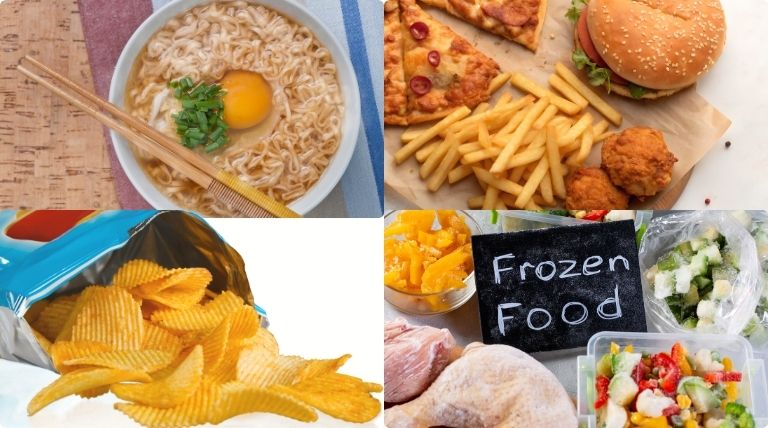
Ultra-processed foods are everywhere in our modern food landscape.
- Instant noodles and cup noodles – those quick meals we reach for when time is short
- Fast food meals – burgers, fried chicken, pizza chains
- Packaged snacks and chips – the colourful bags lining convenience store shelves
- Frozen convenience meals – ready-to-heat dinners and pizzas
How Can You Tell They Are Ultra-Processed Foods?
Ultra-processed foods are everywhere, but they can be surprisingly hard to recognise. While there’s no single test to identify them, a few warning signs can help you spot them on the grocery shelf:
- More than five ingredients listed – check that label, and you will often find a long list of ingredients
- Ingredients you cannot pronounce – if it sounds more like chemistry than cooking, it’s likely ultra-processed
- Long shelf life products – foods that can sit for months without spoiling are usually heavily processed. To achieve this, manufacturers often rely on preservatives, additives, and industrial processing techniques.
As one researcher put it, ultra-processed foods are like “pornography – it’s hard to define but you know it when you see it.” Your grandmother probably wouldn’t recognise many of these ingredients as food.
The Protein Hunger Effect
Your Body’s Protein Priority
Here is something fascinating about how your body works: it has a specific protein target it needs to meet each day. This is called the “protein leverage hypothesis,” and it’s a game-changer for understanding why UPFs leave you unsatisfied.
Your body needs a certain amount of protein to function properly (at least 0.8 grams of protein per kilogram of body weight) – to build and repair tissues, make enzymes and hormones, and keep you healthy. Until you meet this protein requirement, your body will keep signalling hunger.
The Dilution Problem
Ultra-processed foods create what researchers call a “protein dilution” problem:
- UPFs are usually low in protein but high in calories
- To get enough protein from UPFs, you need to eat much more food overall
- This means consuming far more calories than your body actually needs
Here’s a real-world example: A serving of instant noodles might give you only 8-10 grams of protein but pack 400-500 calories. To meet your daily protein needs (at least 50 grams for the average adult), you’d need to eat five or more servings. That’s over 2,000 calories just from instant noodles! Compare this to cooked chicken breast, where just 200 grams provides about 60-64 grams of protein for only 330-380 calories.
How UPFs Disrupt Your Hunger Hormones
The Hormonal Imbalance
Research from the US National Institutes of Health revealed something remarkable about how UPFs affect our hunger hormones. When people eat ultra-processed foods:
- PYY (your fullness hormone) decreases – this hormone normally tells your brain you’re satisfied
- Ghrelin (your hunger hormone) stays elevated – keeping you in a constant state of wanting more food
The Speed Factor
UPFs are also eaten faster than whole foods. They’re soft, require less chewing, and go down easily. This means your body doesn’t have time to signal fullness before you’ve already overeaten.
It takes about 20 minutes for your brain to register that you’re full, but you can polish off a fast food meal in about half that time.
The 500-Calorie Trap
In a groundbreaking study, researchers found that people who ate ultra-processed foods consumed an average of 500 extra calories per day compared to when they ate unprocessed meals – even though both diets were matched for nutrients and people could eat as much as they wanted.
Over just two weeks, participants gained 2 pounds (≈0.91 kg) on the ultra-processed diet.
Your Brain on Ultra-Processed Foods
Reward Centre Hijacking
Ultra-processed foods don’t only affect your stomach; they rewire your brain. These foods:
- Alter brain regions controlling feeding behaviour, particularly the reward centres
- Create a cycle where eating UPFs makes you crave more UPFs
- Generate patterns similar to addictive behaviours
Think about it. When you’re stressed or tired, what do you crave? Probably not a salad. Your brain has learned that UPFs provide a quick reward hit.
The Inflammation Connection
The additives in ultra-processed foods can:
- Irritate your gut lining, disrupting your microbiome
- Trigger inflammation that travels from your gut to your brain via the gut-brain axis
- Create a foggy, inflamed state that affects decision-making around food
Long-term Changes
Even small increases in UPF intake create measurable brain changes. Your taste preferences shift, your reward thresholds change, and whole foods start to seem less appealing.
But here is the good news. These changes are reversible when you reduce UPF consumption.
Breaking the Cycle
Start with Breakfast
One of the most powerful changes you can make is starting your day with protein.
- A high-protein breakfast reduces overall daily calorie intake
- It sets your hunger hormones on the right track for the entire day
- You’ll find yourself less likely to snack mid-morning
Try these protein-rich breakfast options:
- Veggie omelette with whole-grain toast
- Greek yoghurt with nuts and berries
- Nut butter spread on sourdough toast with soft-boiled eggs
- Overnight oats with added minimally processed protein powder or nuts
Smart Swaps
You don’t have to eliminate all convenience from your life. Instead, make strategic swaps:
- Choose hawker centre options over fast food – freshly cooked meals are usually less processed
- Opt for whole foods when possible – an apple instead of apple juice, whole grain bread instead of white bread
- Look for UPFs with added protein and fibre – if you must choose packaged foods, pick ones with better nutritional profiles.
The Gradual Approach
If you are making changes on your own, a gradual approach often works best:
- Focus on reducing intake by 10% at a time
- Remember that each small reduction matters
- Start by identifying your biggest weakness
However, with proper supervision and structured support—like what we provide in our programme—more dramatic changes can be both safe and sustainable.
Your Action Plan
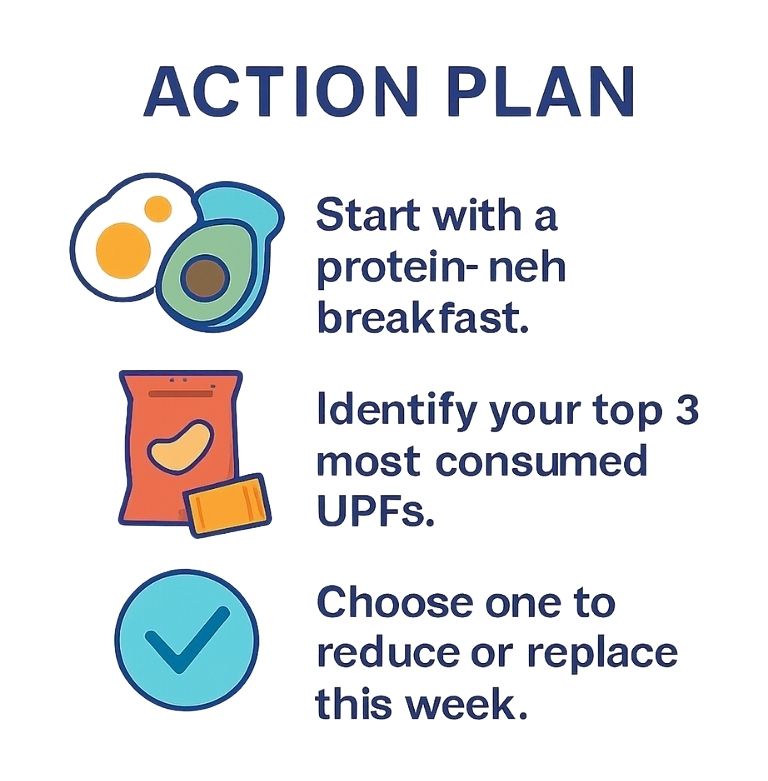
As you wake tomorrow, take the first step. Here is a good starting point, which you can tweak according to your routine.
- Start with a protein-rich breakfast.
- Identify your top 3 most consumed UPFs.
- Choose one to reduce or replace this week.
Keep in mind that you are not weak-willed for craving these foods. They’re literally designed to make you want more. But now that you know how they work, you have the power to make different choices.
Final Thoughts
Breaking free from the ultra-processed food cycle is not about perfection or never enjoying convenient foods again. It’s about understanding what these foods do to your body and brain, then making informed choices that support your health goals.
Every time you choose a whole food over an ultra-processed one, you’re retraining your taste buds, rebalancing your hormones, and reclaiming control over your hunger. Be patient with yourself. You’re undoing years of conditioning, and that takes time.
Lasting results come from the right knowledge, structure, and support. If you’re ready for personalised guidance on nutrition and wellness or want to discover the most effective weight loss program for your goals, connect with Eureka Wellness and start transforming your health today.