


Key Takeaways
|
Why Eating Less Stops Working After A While
When you eat less, your body uses less energy to match your lower intake. This is called adaptive thermogenesis. In simple terms, your body becomes more efficient and starts burning fewer calories than it used to, even when you are doing the same activities.
Research suggests this drop in calorie burn can be larger than what is expected from weight loss alone. So even if a calculator says you should be burning 1,800 calories a day, your body may only be burning around 1,500.
The change happens in several ways at once. Your cells become more efficient at making energy. Your organs use slightly less fuel. Your body slows down processes it considers non-essential. Each one may seem trivial on its own, but together they can lower your daily calorie burn enough to stall weight loss.
| Adaptation | What Happens | Why It Matters |
| Slower resting metabolism | Your body burns 3–5% fewer calories at rest | You burn less than expected |
| More efficient cells | Cells produce energy using less fuel | Daily activities cost fewer calories |
| Lower organ activity | The heart, liver, and kidneys use less energy | A small but steady drop in calorie burn |
| Reduced repair work | Non-essential body repairs slow down | The body saves energy at every level |
These changes usually become noticeable after six to eight weeks of eating in a calorie deficit. They also rarely happen alone. While your metabolism is slowing down, your hunger hormones often start shifting too — and that is where the next problem begins.
The Hormones Working Against You
Your hormones tell your body when to eat, when to stop, and how much energy to burn. During weight loss, two hormones in particular change in ways that increase hunger and slow your calorie burn.
Leptin is made by your fat cells. It tells your brain that you have enough energy stored. When you lose fat, leptin levels drop, and your brain may treat this as a signal that food is running low. To protect you, it can trigger more hunger and slow down how many calories you burn. Ghrelin does the opposite. It is made in your stomach and signals hunger. When you eat less, ghrelin levels rise, making you feel hungrier than usual.
| Hormone | Source | What Happens In A Deficit | Effect On You |
| Leptin | Fat cells | Levels drop | More hunger, slower metabolism |
| Ghrelin | Stomach | Levels rise | Stronger appetite, more food cravings |
| PYY | Gut | Levels drop | Meals feel less filling |
| GLP-1 | Gut | Levels drop | Hunger returns sooner after eating |
The result is that your appetite goes up while your energy burn goes down. Over a few weeks, this combination can slowly cancel out your calorie deficit — even if you are still eating the same portions you started with. Once your intake matches your reduced calorie burn, weight loss naturally plateaus.
And hormones are only one part of the story. What you are eating, or what you think you are eating, may also be working against you.
The Hidden Calories You’re Probably Missing
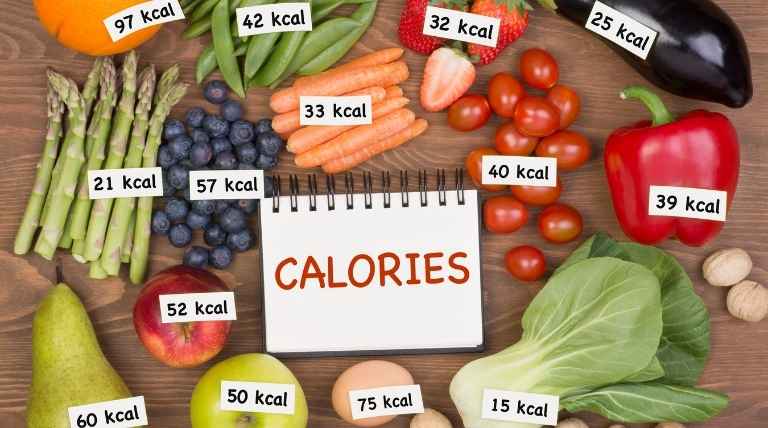
Even when your hormones are not the problem, miscounted calories can still stall your progress. By miscounted, we mean the gap between what you think you are eating and what you are actually eating. Research consistently shows that people underestimate how much they eat each day.
The reason is simple. Some foods carry a lot of calories in a small portion, so they’re easy to underestimate. Two tablespoons of olive oil contain about the same calories as four oranges. A flavoured latte can hold as many calories as a small meal. A green smoothie can reach 350 to 500 calories once you add nut butter, honey, and half an avocado.
Liquid calories are especially easy to miss. Drinks do not require chewing and pass through the stomach quickly, so they don’t trigger fullness the way solid food does. You can drink a few hundred calories in minutes without feeling full afterwards.
And even if your food tracking is accurate, there is one more piece of the puzzle most people overlook — it’s how much you actually move during the day.
Why You’re Moving Less Without Realising It
During weight loss, your daily movement often drops without you noticing because your body looks for ways to save energy.
Scientists call this NEAT, which stands for non-exercise activity thermogenesis. It refers to all the calories you burn outside of sleeping, eating, and planned workouts. This includes fidgeting, walking around the house, standing while on a call, and taking the stairs.
NEAT levels can differ by up to 2,000 calories a day between two people of similar size. When you are in a calorie deficit, your body responds by lowering this background movement to conserve energy. You may sit a bit longer between tasks, take fewer extra steps, or feel less inclined to do small chores around the house. Your gym session still happens, but the small movements throughout the rest of your day drop off.
| Daily Activity Level | Estimated NEAT |
| Mostly seated, very little movement | ~300 kcal |
| Seated but with some movement | 700–1,000 kcal |
| On your feet, often active | ~1,300 kcal |
| Physically demanding work | ~2,300 kcal |
Note: These are estimates. Actual calorie burn depends on factors like age, weight, and body composition.
This is one reason a plateau can feel confusing. From your point of view, nothing has changed — you are eating the same and exercising the same. But behind the scenes, the small unplanned movements that used to burn extra calories have quietly dropped, and those missing calories add up over time.
For most people, the combination of slower metabolism, shifting hormones, hidden calories, and reduced daily movement is enough to explain a stubborn plateau. But for some, the cause runs deeper than diet and movement alone.
When the Problem Isn’t Your Diet

Sometimes the diet is right. The portions are measured. The deficit is real. And the scale still doesn’t move. In these cases, something other than food may be slowing you down. The most common causes are an underlying medical condition, a medication, or a lifestyle factor like stress or poor sleep.
Underlying Medical Conditions
Hypothyroidism is one possibility. It slows the metabolism and often comes with fatigue and cold intolerance. Insulin resistance is another. It pushes your body to store fat instead of burning it for fuel. Polycystic ovary syndrome (PCOS) can cause weight gain around the abdomen and is often linked to insulin problems. Cushing’s syndrome, though less common, raises cortisol levels and can make it hard to lose fat, especially around the belly.
Medications
Some medications can also work against weight loss. These include certain antidepressants, beta-blockers, corticosteroids, and insulin-based diabetes treatments. They may raise appetite, slow the metabolism, or cause water retention. You should never stop a prescribed medication on your own, but it may be worth asking your doctor if a different option is available when results have stalled for a long time.
Lifestyle Factors
Stress and poor sleep belong in this list, too. Long-term stress keeps cortisol levels high, which can encourage belly fat storage and increase cravings for sugary or fatty foods. Poor sleep can also raise ghrelin and lower leptin the next day, which means you wake up hungrier and feel less satisfied after meals. On top of that, tiredness tends to weaken your self-control, making it harder to resist sugary or high-calorie foods when cravings strike.
How to Break Through a Plateau the Right Way
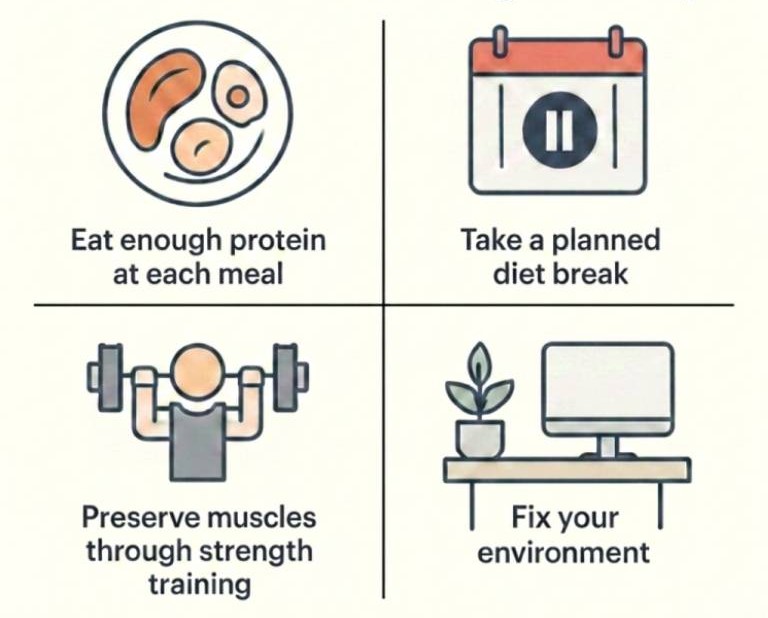
When the scale stops moving, the first instinct is usually to eat even less. This rarely helps. Cutting calories further often makes the same problems worse — your metabolism slows even more, hunger becomes more intense, and you may start losing muscle along with fat. A better approach is to give your body what it needs to keep working efficiently, rather than starving it of more fuel.
A few strategies tend to help:
- Eat enough protein at each meal. Aim for at least 25–30 grams of protein per meal from sources like eggs, Greek yoghurt, lean meats, beans, or tofu. Protein keeps you full, protects your muscles, and uses more energy to digest than carbs or fat.
- Take a planned diet break. Eating at your maintenance calories for one or two weeks every six to eight weeks may help reset your hunger hormones and ease the slowdown.
- Preserve muscles through strength training. Muscles burn more calories at rest than fat, so maintaining them can help support a higher daily calorie burn. and improve metabolic health
- Fix your environment. Sleep well, manage stress, and keep tempting foods out of easy reach. For example, keeping crisps off the kitchen counter or stocking the fridge with cut fruits makes the healthier choice easier when cravings hit. Your surroundings shape your habits more than willpower alone.
This is why an effective weight loss program focuses on nutrition, metabolic support, and lifestyle change rather than relying only on calorie restriction. Your body responds best to a combined approach — not to less food alone.
How to Continue Weight Loss Once the Scale Starts Moving Again
Breaking through a plateau is one challenge. Keeping progress going without regaining the weight, or burning out, is often the harder part.we
Once the scale starts moving again, the goal is to keep your body in a steady, sustainable fat loss phase. That means maintaining the habits that restarted progress, rather than reverting to old patterns or pushing extremes
Daily weigh-ins can be replaced with weekly check-ins, which smooth out normal fluctuations and give a clearer view of overall trends. Protein intake should remain consistent to support fullness and preserve muscle mass. Strength training and daily movement habits should also stay in place, as they help maintain a higher overall calorie burn.
As weight loss resumes, avoid abruptly returning to previous eating habits. Instead, if needed, you can slowly increase intake over time — around 50 to 100 calories per week — to reduce excessive hunger and lower the risk of quickly regaining weight. This gradual adjustment is sometimes referred to as reverse dieting, and it helps the body adapt more smoothly to changes in intake.
The key to continued fat loss is consistency, not perfection. You don’t need to do more than what worked — you just need to keep doing it steadily enough for results to continue over time.
Frequently Asked Questions
Why am I gaining weight even though I’m eating less?
Short-term weight gain is often water, not fat. Intense workouts, salty meals, hormonal cycles, and high stress can all cause your body to hold extra fluid for a few days. Monitoring your weight over two to four weeks gives a more accurate picture than checking it daily.
How long does a weight loss plateau usually last?
A short plateau caused by water retention or inflammation often lasts one to three weeks. A longer plateau caused by metabolic and hormonal changes may last four weeks or more. The longer the stall, the more likely your body has adapted to your current calorie intake.
Can hormones really stop me from losing weight?
Yes. During a calorie deficit, leptin and ghrelin shift in ways that increase hunger and reduce energy use. Conditions like PCOS and hypothyroidism can make this effect stronger, and they may need to be checked by a doctor.
Should I eat more to break a plateau?
Sometimes, yes. Eating at maintenance calories for one to two weeks may help regulate hunger hormones and reduce the metabolic slowdown that often happens during prolonged dieting. This works best when paired with steady protein intake and regular strength training.
When to Consider Professional Support
If you have been consistent with your nutrition and activity habits for several weeks but the scale is still not moving, it may be time to seek professional support.
A long stall can point to hormonal imbalances, metabolic issues, or eating and lifestyle habits that are harder to spot on your own. Body composition tests, hormonal checks, and coaching can offer better clarity on what is actually going on and what to do next.
At Eureka Wellness, we work with people in exactly this situation — those who have done the basics, hit a plateau, and want a clearer way forward. If you’ve been eating less without seeing meaningful results, we’d be glad to help you figure out why and what may work better for your body.