


Obesity rates in Singapore are climbing steadily, with 46.5% of adults classified as overweight or obese. This is the second-highest figure recorded in the 21st century, according to the Global Obesity Observatory. This trend is prompting more Singaporeans to adopt healthier lifestyles.
Many diets mostly focus on ‘what’ we eat, but there are studies pointing to a certain factor that is usually overlooked which is equally important: it’s the speed at which we eat our meals.
The average person in our country eats out 5 to 6 times per week, and fast-paced dining has become the norm.
Fast Eaters vs. Slow Eaters
Research has shown a clear connection between how fast you eat and your body weight.
Large-scale studies consistently find that people who eat quickly tend to weigh more than those who take their time in eating. In fact, fast eaters can be up to 115% more likely to be obese.
One study of over 4,000 middle-aged adults found that very fast eaters not only weighed more but had also gained the most weight since turning 20. This suggests that eating speed could play a big role in long-term weight gain.
Another 8-year study of 529 men showed similar results. Fast eaters gained over twice as much weight as those who ate slowly or at a moderate pace — a big difference over time.
A report from UChicago Medicine also found that slow eaters were 42% less likely to be obese, and normal-speed eaters were 29% less likely to be overweight compared to fast eaters. Interestingly, more women than men were slow eaters, suggesting that eating speed may differ between genders.
Why Speed Affects Your Weight

When you start eating, your body initiates a complex cascade of signals between your digestive system and brain.
The Gut-Brain Communication
When you start eating, your stomach begins to fill and stretch. Sensors in its walls quickly send “we’re filling up” messages to your brain through the vagus nerve . This is the first signal that you might soon feel full.
As the food moves into your small intestine, special cells detect the nutrients and release hormones like cholecystokinin (CCK). This not only tells your brain you’ve had enough, but also slows the speed at which your stomach empties, giving your body time to process what you’ve eaten.
In the background, your fat cells produce leptin, a hormone that tracks your long-term energy reserves. Leptin can boost the fullness signals from other hormones and, over time, even help fine-tune how your brain’s reward system responds to food.
The 20-Minute Rule
Leslie Heinberg from the Centre for Behavioural Health at Cleveland Clinic said, “It takes about 20 minutes for the stomach to communicate to the brain via a whole host of hormonal signals that it’s full.”
If you are someone who can finish a meal in less than 20-30 minutes, then you are eating too fast.
When you eat too fast, you’ll be able to consume more food before your brain receives and processes these satiety signals. In short, you are consuming calories in the blind spot between eating and feeling full.
This explains why many people experience that uncomfortable feeling after eating a large meal quickly.
Brain Imaging and Hormonal Responses
Recent advances in brain imaging technology have provided insights into how eating speed affects our bodies and brains.
A groundbreaking study using functional magnetic resonance imaging (fMRI) examined participants who consumed the same 600-calorie meals at a normal pace and a slow pace (6 minutes vs. 24 minutes).
The results revealed fascinating differences between the two groups. Two hours after the meal, slow eaters reported greater fullness and demonstrated more accurate memory of the portion sizes they had consumed. The fMRI scans showed increased activity in brain regions associated with satiety and reward processing in slow eaters, suggesting that their brains were more effectively registering the meal consumption.
The Role of Chewing in Weight Management

Research suggests that chewing may have independent benefits for weight control, though it is an integral component of slow eating. Multiple studies have found that people with weight problems tend to chew their food significantly less than those maintaining a healthy weight.
In an experiment, researchers asked 45 participants to eat pizza until they felt full while varying their chewing rates. When people chewed 1.5 times more than normal, their calorie intake decreased by 9.5%. When they doubled their normal chewing rate, calorie intake dropped by nearly 15%. The mechanism appears to be twofold: increased chewing naturally slows eating pace, and it may also enhance the release of satiety hormones.
Another study found that increasing chews per bite from 15 to 40 resulted in decreased calorie intake and increased levels of fullness hormones. The act of chewing itself appears to prime the digestive system and may begin triggering satiety signals even before food reaches the stomach.
More Than Just Weight Loss
Managing weight might be the primary motivator for many people to consider eating more slowly, but there are other benefits that you might get.
Improved Digestion and Nutrient Absorption
Eating slowly and chewing thoroughly begins the digestive process in your mouth, where enzymes in saliva start breaking down carbohydrates. It can reduce the burden on your stomach and intestines that can further minimise digestive discomfort, bloating, and acid reflux.
Thoroughly chewing the food also creates smaller food particles, increasing the surface area available for digestive enzymes to work on. This enhances nutrient absorption, meaning your body can extract more nutrients from the same amount of food.
Psychological and Emotional Benefits
Mealtime might be one of the few opportunities we have to slow down and be present. So eating slowly can become a form of mindfulness practice, which helps reduce stress and anxiety. Many people report feeling calmer and more in control when they eat mindfully.
When you eat slowly, you have time to appreciate flavours, textures, and aromas that might be missed when rushing. This increased satisfaction might reduce the psychological need to eat more to feel fulfilled.
Social and Relationship Benefits
Slow eating facilitates better conversation and connection during shared meals. Taking time to eat can potentially strengthen relationships and create more meaningful dining experiences.
Family dinners where everyone eats slowly together have been associated with numerous benefits for children, including lower rates of obesity and eating disorders.
Behavioural Techniques That Help You Eat Slowly
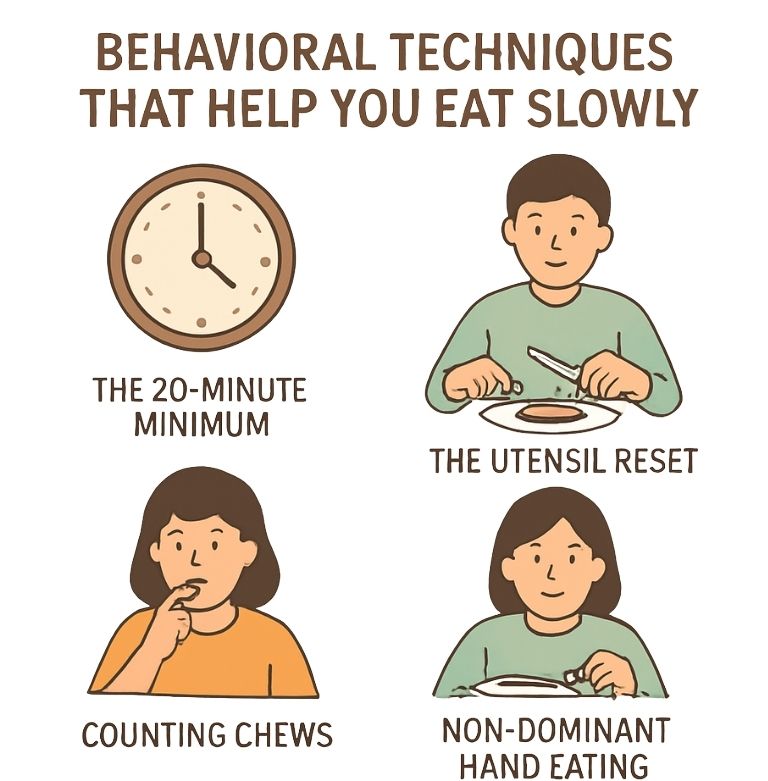
The 20-Minute Minimum
Use a timer to make sure your meals last at least 20 minutes. It might feel artificially slow at first but it allows your satiety hormones time to signal fullness. Start by adding just 5 minutes to your typical meal duration and then slowly increase.
The Utensil Reset
Put down your fork, spoon, or chopsticks between each bite to naturally create pauses in your eating rhythm. Don’t pick up your utensil again until you’ve completely chewed and swallowed the current bite.
Counting Chews
Counting every chew might be impractical in the long-term but doing it occasionally helps build awareness of your current chewing habits. Aim for 20-30 chews per bite for most foods and then adjust based on texture.
The Non-Dominant Hand Technique
Try eating with your non-dominant hand at times. It slows down your eating and increases mindfulness about the eating process.
Overcoming Common Obstacles
Time Constraints
You may say that you don’t have time to practice slow eating. But consider this, eating a meal in 20 minutes versus 6 minutes only adds 14 minutes to your day. For three meals, that’s 42 minutes, which is less than a usual TV episode. Slow eating’s benefits for weight management and digestion likely outweigh this time investment.
If you really have a hectic schedule daily, you may want to focus on eating at least one meal slowly. Choose the meal where you have the most control over timing, whether that’s breakfast at home or dinner after work.
Workplace Culture
In many offices, eating quickly at your desk while continuing to work is normalised or even expected. Start by taking proper lunch breaks yourself and then invite colleagues to join you for slower, more mindful meals.
The Strength of Forming Habits
Fast eating is often a deeply ingrained habit developed over years or decades. Research suggests it takes an average of 66 days for a new behaviour to become automatic. Be patient with yourself and expect setbacks.
Focus on your progress instead of aiming to be perfect.
The Bottom Line: Make a Simple Change
The path from fast eating to slow eating is not easy. But with patience, practice, and consistency, it might be a gateway to a more enjoyable relationship with food. Choose to eat slowly not only because of its impact on weight loss, but also because of the profound effects on your health and quality of life. Do you have any questions about mindful eating or are you looking for an effective weight reduction program for sustainable weight loss? Contact Eureka Wellness to discuss your concerns.