

Many women approaching the menopausal period notice that they are gaining weight, especially around the midsection. It isn’t your imagination. It’s a real psychological response to this transition.
“I went to sleep and I woke up and I felt like I was 5kg heavier,” is a common sentiment expressed by women entering menopause. It can be frustrating especially when your eating habits and exercise routines haven’t changed.
Let’s explore the biological mechanisms behind menopausal weight gain and what you can do to maintain a healthy weight during this transition.
The Reality of Menopause Weight Gain
Weight gain often begins a few years before menopause (perimenopausal phase). This transitional period can start as early as seven to ten years before your final menstrual period. During this time, women gain about 1.5 pounds (0.7 kg) per year through their 50s, even without changing eating habits or activity levels.
The weight gain happens gradually and becomes more and more noticeable as time passes. Many women report gaining 4.5 to 7.5 kg during the menopausal transition.
The Shift in Body Composition
Aside from the additional kilograms on the scale, your body composition also changes. Women also lose muscle mass because of the declining oestrogen levels. Since muscle burns more calories than fat, this loss directly contributes to a slowing metabolism.
Perhaps the most visible change is where the fat accumulates. Before menopause, women tend to store fat in the hips, thighs, and buttocks. After menopause, fat storage shifts predominantly to the abdomen.
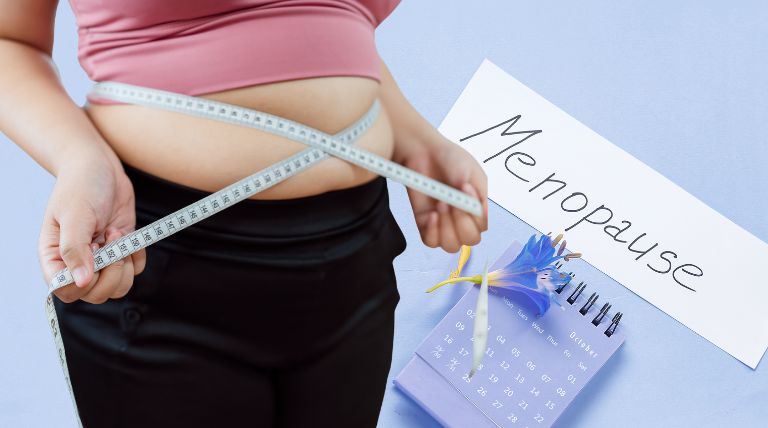
Belly fat also increases in menopausal women, from 5-8% (premenopausal) to 15-20% (postmenopausal). This is not just subcutaneous fat (the kind you can pinch) but also visceral fat that wraps around internal organs.
Why Menopause Leads to Weight Gain
The weight gain that accompanies menopause isn’t simply a matter of eating too much or exercising too little. There are multiple factors that create the perfect conditions for weight gain.
Your body becomes more efficient at storing fat (visceral fat) and the regulation of hunger and fullness signals may become less effective. Aside from oestrogen, progesterone levels also fall during menopause. This decline contributes to water retention and bloating, decreased metabolic rate, and increased insulin resistance.
Age-Related Factors
Beginning in your 30s, you naturally lose muscle mass at a rate of about 3-8% per decade. This loss accelerates after age 50 and is called sarcopenia. This condition has implications for weight.
- Each pound of muscle burns approximately 6 calories per day at rest, compared to fat (which burns only 2 calories)
- By age 50, the average woman has lost about 15% of her muscle mass from her younger years.
- This muscle loss translates to a slower metabolism and fewer calories burned daily.
If you continue eating the same amount while your metabolism slows, weight gain becomes almost inevitable.
Lifestyle and Behavioural Factors
Many women become less physically active with age due to:
- Joint pain and other physical limitations
- Increased work responsibilities
- Caregiving duties for children, grandchildren, or ageing parents
- Fatigue from sleep disruptions caused by hot flashes and night sweats
Reduced activity levels compound the metabolic changes already happening.
Health Risks Associated with Menopausal Weight Gain
The weight gain that comes with menopause is not just a cosmetic concern. The location of this weight gain (abdomen) poses significant health risks that should never be ignored.
Menopausal weight gain usually appears as “central adiposity” or belly fat. Visceral fat is metabolically active tissue that functions almost like an endocrine organ, releasing:
- Inflammatory proteins
- Hormones
- Free fatty acids
These substances enter your bloodstream and travel throughout your body, creating a cascade of negative health effects.
Cardiovascular Disease
The risk of developing cardiovascular diseases increases after menopause in most cases, making it the leading cause of death in Singapore. Menopause-related weight gain contributes to this risk.
- Raising blood pressure
- Increasing LDL (bad) cholesterol levels
- Lowering HDL (good) cholesterol levels
- Promoting inflammation in blood vessels
- Contributing to atherosclerosis (hardening of the arteries)
Type 2 Diabetes
The visceral fat that’s stored during menopause directly affects how your body processes glucose. It increases insulin resistance (making it harder for cells to use glucose). It also promotes chronic inflammation that further impairs glucose metabolism.
And it contributes to elevated blood sugar levels, too.
Cancer
In postmenopausal women, excess body weight is associated with an increased risk of the following cancers.
- After menopause, fat tissue becomes the primary source of oestrogen. Higher oestrogen levels from excess fat tissue can stimulate breast cell growth and increase breast cancer risk.
- Similar to breast cancer, excess oestrogen production from fat tissue can stimulate the endometrial lining, increasing endometrial cancer risk.
- Increased inflammation and insulin resistance associated with visceral fat raise the risk of colon cancer.
Impact on Menopausal Symptoms
Excess weight can actually worsen other menopausal symptoms like hot flashes, mood disturbances and decreased libido.
Effective Strategies to Manage Weight During Menopause
While it is true that menopausal weight gain is challenging to navigate, it is not inevitable. You can still maintain a healthy weight or even lose excess pounds. Here’s what you can do.
Nutrition
Most women need approximately 200 fewer calories daily in their 50s compared to their 30s and 40s. So focus on nutrient density rather than simply reducing portion sizes. You can track your food intake for a few days to identify where adjustments can be made.
Research consistently shows the Mediterranean diet is ideal for menopausal women.
The Mediterranean diet is:
- Rich in fruits, veggies, whole grains, fish, nuts, and olive oil
- Associated with less weight gain during menopause
- Helps reduce inflammation and improves insulin sensitivity
- Reduces the risk of heart disease, diabetes and certain cancers
- Improves cognitive function and mood
Make sure you’re taking enough protein to preserve muscle mass. Aim for 1.0 to 1.2 grams of protein per kilogram of body weight daily. Distribute your intake throughout the day with lean sources like fish, poultry, legumes, tofu, eggs and low-fat dairy.
Plant-based foods are beneficial.
Did you know that a predominantly plant-based diet has many benefits for menopausal women? Higher fibre content helps promote satiety and control hunger. Phytoestrogens in soy and other plants may help manage certain menopausal symptoms.
Manage your carbohydrates.
Choose complex carbohydrates with a lower glycemic index and limit added sugars. If possible, reduce or eliminate sugar-sweetened beverages and processed carbohydrates such as white bread, pastries, and snack foods.
Practise mindful eating.
You must pay attention to hunger cues. Eat slowly and without distractions. Stop eating when you’re satisfied, not full.
Some other tips include using smaller plates and planning meals so you can avoid impulsive, less healthy choices.
Lifestyle Adjustments to Make
Quality Sleep
Because sleep disruptions are common during the menopausal period, we can navigate this by focusing on sleep hygiene.
Maintain a consistent sleep schedule even on weekends. Make sure that you sleep in a cool, dark, and quiet room. As much as possible, avoid screen time before going to bed and avoid consuming caffeine after midday (alcohol near bedtime). And consider investing in moisture-wicking pajamas and bedding if night sweats are a problem.
Stress Management
It is only wise to avoid chronic stress because it contributes to weight gain. You can try deep breathing exercises when you are stressed, or spend some time in nature. You can also join a support group with other women experiencing menopause.
Limit Alcohol
Alcohol provides empty calories and it may trigger/worsen hot flashes. So it’s recommended that you limit your alcohol intake to manage your weight better. Aim for no more than one drink daily or consider avoiding alcohol altogether.
Conclusion
Always remember that small, consistent changes are more effective than drastic measures. Focus on progress rather than perfection, and be patient with yourself as you implement new habits.
The goal is not necessarily to maintain the exact weight or body shape of your younger years because our bodies naturally change with age, but to support your general well-being through this transition.
If you are struggling with weight gain or severe menopausal symptoms associated with weight gain that interfere with your daily life, don’t hesitate to talk to us. We offer an effective weight loss program that works for menopausal women like you.