

Sleep is as essential to our daily needs as food and water. Although we may feel that sleep simply rests our tired bodies, our brain remains active throughout the night. Sleep plays a critical role in brain and physical functioning, including weight regulation.
Singaporeans are among the most sleep-deprived worldwide, ranking third out of the 43 cities profiled in a report. Only one out of four Singaporeans get more than 7 hours of sleep daily, and 17% of the respondents sleep through the night. This prevalence may be due to long work hours and urban lifestyle factors.
We will discuss how insufficient sleep can contribute to a person’s weight gain and general well-being.
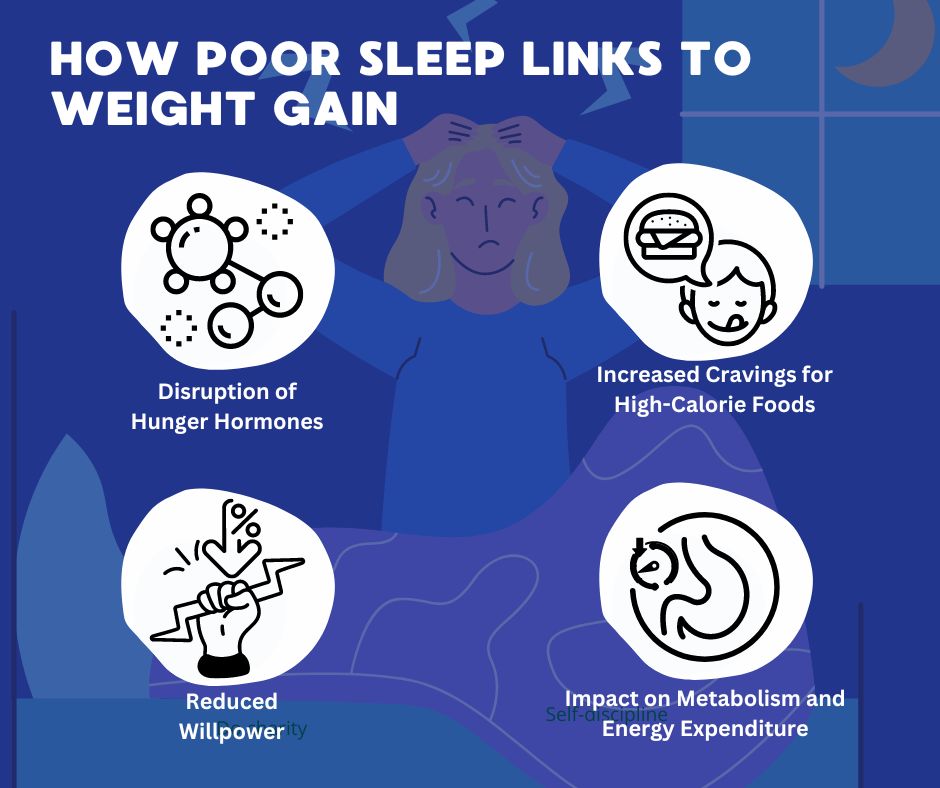
How Poor Sleep Links to Weight Gain
Here is how the lack of quality sleep links to weight gain.
Disruption of Hunger Hormones
Sleep is essential for regulating the hormone that control hunger and fullness.
- Ghrelin – is known as the ‘hunger’ hormone. It stimulates appetite. Your body produces more of this hormone when you are sleep-deprived. So you may notice an increased appetite.
- Leptin – also known as ‘satiety’ hormone. It signals fullness to your brain. Your body produces less of this when you lack quality sleep. So not only do you crave more, but you also get hungry more frequently.
Even if your body doesn’t need additional calories, your body tells your brain otherwise. This uncontrollable hunger may be difficult to manage, especially if the sight of food is near you.
Increased Cravings for High-Calorie Foods
Sleep deprivation affects ‘what’ you crave. Research shows that sleep-deprived individuals tend to search for foods high in calories, carbohydrates, and fat.
Brain imaging research shows that getting less than 7 hours of sleep per night activates the brain’s reward centre, which heightens cravings for refined carbohydrates that cause blood sugar spikes and trigger the release of fat-storing insulin.
In addition, the olfactory system or sense of smell becomes more sensitive to food aromas. Sleep deprivation disrupts communication with brain regions responsible for making food choices, which may lead to poorer decision-making regarding food and cause individuals to gravitate towards high-energy foods like doughnuts and potato chips.
The temptation of a late-night snack also becomes much harder to resist when you are operating on too little sleep.
Reduced Willpower
Recent research has delved deeper into the link between sleep deprivation and our capacity for self-control. A review in Frontiers of Human Neuroscience examined numerous studies on this topic. The results indicated that people who are sleep-deprived are more likely to give in to impulses.
Sleep deprivation undermines self-control in two ways. First, it reduces your capacity to exercise willpower. And second, it lowers the energy required to maintain it.
Brain imaging studies provide further evidence of this. The prefrontal cortex (a region associated with self-regulation) becomes more active when we try to control our actions. However, research on sleep deprivation has shown reduced activity in this brain area after poor sleep, which suggests that our ability to manage impulses may be neurologically compromised when we are sleep-deprived.
Impact on Metabolism and Energy Expenditure
Some people might think that sleeping less means they burn more calories by being awake longer. This is wrong. In fact, sleep deprivation can slow down your metabolism.
Researchers found that when dieters, even with the same calorie consumption, reduced their sleep over a 2-week period, their fat loss decreased by 55%. It may not seem much at first, but over time, it accumulates and leads to reduced weight loss progress.
In addition to this, when you are tired, you are less likely to engage in physical activities. The heat and humidity can already make exercise challenging, and the added burden of fatigue can make it even harder to motivate yourself to stay active.
The Vicious Cycle
The connection between obesity and sleep disorders is not a one-way street. It’s a complex, bidirectional relationship that creates a challenging cycle for people who are already struggling with weight management.
How Excess Weight Leads to Sleep Problems
Obese people are more likely to report that they have trouble sleeping than those who are not. Researchers suggest that obesity may alter metabolism and sleep-wake cycles in a way that causes the quality of sleep to deteriorate.
One of the most common sleep disorders associated with obesity is obstructive sleep apnoea (OSA). It occurs when the upper airway becomes repeatedly blocked during sleep, leading to brief pauses in breathing while asleep. Remember that OSA does not simply disrupt your sleep, it poses serious health risks. It increases your risk of hypertension, type 2 diabetes and heart attack.
How Sleep Problems Contribute to Further Weight Gain
The relationship goes both ways. This is a vicious cycle that can be hard to break.
- Metabolic Changes
- OSA impairs glucose tolerance and insulin sensitivity
- It can increase cortisol levels (increased appetite and cravings for high-calorie foods)
- Interrupted sleep caused by sleep apnoea affects the hormones regulating appetite and satiety due to frequent awakenings
- Daytime Fatigue
- People with sleep disorders often experience daytime fatigue
- One result is engaging less in daily activities that burn calories
- Many people try to combat fatigue with sugary drinks or high-calorie coffee shop beverages
- Fatigue can also affect food choices, so be mindful of overeating
- Breaking the Cycle
- If you have been gaining weight unexpectedly, it’s time to consider the quality of your sleep as part of your overall health strategy.
- For instance, if you suspect you might have sleep apnoea (your partner complains about your loud snoring), consider seeking help from a sleep specialist.
- When you address sleep issues, you not only improve your sleep quality. It is also easier for you to maintain a healthy weight.
Quality vs. Quantity
Both the quantity and the quality of your sleep matter.
The Importance of Sleep Cycles and Stages
Sleep consists of several cycles and stages. Each serves different purposes for our physical and mental health.
Non-REM (Rapid Eye Movement) sleep consists of three stages:
- Stage 1 – the transition from wakefulness to sleep
- Stage 2 – a period of light sleep where your heart rate and breathing regulate
- Stage 3 – deep sleep (slow-wave sleep); during this stage, your body repairs tissues, builds bone and muscle, and strengthens the immune system
REM sleep is when most dreaming occurs. It is crucial for:
- Emotional processing
- Memory consolidation
- Learning and creativity
According to a sleep specialist, during REM sleep, our glucose metabolism increases. Meaning, our bodies burn calories especially during this stage.
How Disrupted Sleep Patterns Affect Weight
Even if you are getting the recommended number of sleep hours, disruptions to your sleep cycles have a negative impact on your weight management efforts.
- Imbalances in ghrelin and leptin
- Disrupt your metabolism
- Higher levels of cortisol
- Daytime fatigue
Practical Tips for Better Sleep
You can employ some strategic adjustments to your environment and habits like these tips below.
Creating a Sleep-Friendly Bedroom
Your senses must be considered when creating a comfortable space to sleep at.
- If you are bothered by city lights at night, you might want to purchase blackout curtains or blinds.
- For a more portable option, an eye mask is sufficient.
- And if noise disturbs your peace at night, you can use a white noise machine or app to mask these sounds.
- Consider using earplugs, too. They are lightweight and reduce noise by about 15-30 decibels if you wear them correctly.
- Set your AC to a comfortable temperature.
- Use breathable, moisture-wicking bedding.
- Keep your bedroom tidy and minimal.
Managing Screen Time and Blue Light Exposure
Often, we are in front of our phone or tablet screens before we sleep. This can also affect our sleep.
- Stop using electronic devices at least 1 hour before bedtime.
- If you must use, turn on blue light filters or wear blue light blocking glasses.
- Create a charging station outside your bedroom.
- Limit late-night social media browsing. Set boundaries.
Nutrition Tips for Better Sleep
Here are the dos and don’ts of food intake before a good night’s sleep.
- Do not drink anything with caffeine after 2 PM, be it coffee, tea, or soft drink.
- Eat your last meal at least 3 hours before bedtime.
- Hydrate yourself throughout the day, but reduce intake a few hours before bed to avoid frequent urination.
- Eat foods that are rich in tryptophan, magnesium and vitamin B6 like bananas and whole grains.
Exercise for Better Sleep
Exercise is good, but it’s best to time when you do your workouts.
- Finish vigorous exercises at least 3 hours before you sleep.
- Consider morning workouts to align your circadian rhythm with natural light.
- Light activity like walking every night before bed helps improve sleep quality.
Improving your sleep habits takes time and consistency. As you go about implementing these changes, be patient with yourself. Habits are established when things are done consistently.
Conclusion
Ultimately, the quick answer to the question “Does lack of sleep cause weight gain?” is YES. Consistent, quality sleep is an important factor in maintaining a healthy weight. Lack of quality sleep can cause you to gain extra weight.
So before you get frustrated that the number on the scale won’t budge after all the efforts of balanced diet and regular physical activity, try to assess your sleeping routine and see if you are getting a good night’s sleep.
If you do but still continue to gain weight, a weight loss coach can help identify the reason and get you back on track. Try joining a healthy weight loss program to get the guidance and redirection you need. Contact us today for a non-obligatory discussion!