

Picture this scenario in your mind. You’ve just survived another long day of back-to-back meetings, barely had time for lunch, and got squeezed into a packed MRT during peak hour. By the time you finally reach home, your shoulders ache, your phone is still buzzing with work messages, and you’re standing in front of the fridge wondering what to eat. You’re tired, mentally drained, and suddenly that packet of chips or tub of ice cream feels like the comfort you deserve.
This may be a common experience for many people. The good news is that you can break this cycle, and it starts with understanding how food can be your ally rather than your enemy.
Why Stress Makes Us Gain Weight

To be able to fight stress eating, you first need to understand what is happening inside your body when you’re under pressure.
When your mind registers something as stressful, your body releases a hormone called cortisol (stress hormone). It’s part of your body’s ancient “fight or flight” response, giving you the energy to power through challenging moments.
The problem is that stress is not an occasional sabre-toothed tiger we need to escape. It’s the constant stream of emails, meetings, financial pressures, and social obligations. When cortisol levels remain elevated over prolonged periods, it can lead to:
- Increased appetite (especially for high-calorie, high-sugar foods)
- Fat storage, especially around your midsection
- Disrupted sleep, which further impacts your weight and stress levels
- Slowed metabolism, making it harder to lose weight
Also, your brain and gut are in constant communication, and they share more information with each other than any other two systems in your body. This connection means that what’s happening in your digestive system directly affects your mental state, and vice versa.
When you are stressed, your gut health suffers. When your gut health is compromised, your risk of anxiety and depression increases. Understanding this connection highlights why choosing gut-friendly, nutrient-rich foods can help support your nervous system and overall well-being.
Calming Foods: Fight Stress and Manage Your Weight
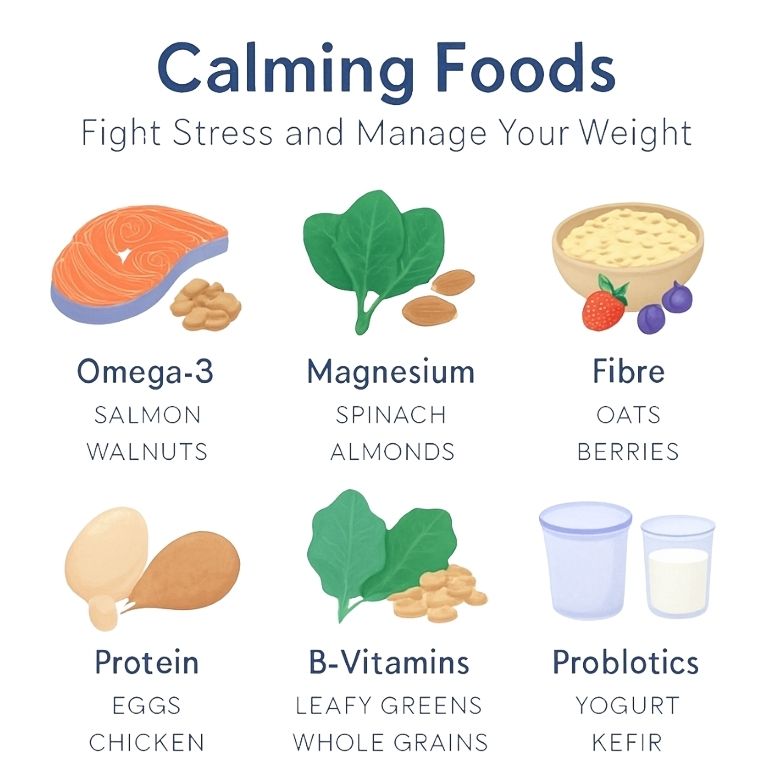
Now that you understand the science, let’s talk solutions. The foods we are about to discuss share characteristics that make them powerful allies in your battle against stress and weight gain. They are usually high in:
- Omega-3 fatty acids
- Magnesium
- Fibre
- Protein
- B-vitamins
- Probiotics
Here are some everyday foods that pack these stress-busting nutrients into one delicious serving:
Salmon and Fatty Fish
This fish is like a nutritional Swiss Army knife, delivering multiple stress-busting benefits in one package.
- Omega-3 fatty acids
- High-quality protein
- Vitamin B12
- Vitamin D
- Magnesium
“You are not just getting one benefit out of salmon,” notes registered dietitian Julia Zumpano. “You’re getting multiple forms of nutrients that can help when it comes to anxiety. You are really maximising one food item.”
Avocados
Holy guacamole! This creamy green fruit deserves its superfood status, especially when it comes to stress management.
- Magnesium
- Fibre
- Heart-healthy monounsaturated fats
You can spread it on your whole-grain toast for breakfast or add it to smoothies to achieve creaminess without dairy. Half an avocado is a proper serving. Yes, avocados are healthy, but they are also calorie-dense (about 160 calories per half). Measure your portions.
Eggs
Eggs have gotten a bad reputation over the years due to cholesterol concerns, but modern research affirms that they are a phenomenal source of nutrition.
Why eggs work:
- High-quality protein stabilises blood sugar and prevents energy crashes
- Vitamin B12 and B7 help support metabolism in times of stress
- Versatile and affordable
For most people, one egg yolk per day is perfectly healthy. If you are making an omelette with multiple eggs, use one or two whole eggs and add extra egg whites for more protein without extra cholesterol.
Lean Meats: Chicken and Grass-Fed (or Lean Cuts of) Beef
Meat gets mixed reviews in the field of nutrition, and for good reason. Eating too much, especially processed varieties, increases your risk of heart disease, diabetes, and cancer. But lean, fresh meats also deliver important stress-fighting nutrients.
Chicken:
- High in protein and B vitamins
- Leaner than most red meats
- Widely available and affordable
Choose fresh chicken breast or thigh meat. Avoid processed options like chicken nuggets and heavily processed luncheon meats.
Grass-Fed or Lean Cuts of Beef
- Loaded with protein and vitamin B12
- Offers more nutrients and healthier fats than many conventional beef options
- Should be consumed in moderation
Lean meats like chicken and grass-fed or lean beef can be part of a balanced, stress-supporting diet. Just remember that freshness and portion control make all the difference.
Beans and Lentils
Welcome to the plant-based protein powerhouse category! Beans and lentils offer exceptional benefits for reducing stress.
- High-fibre content feeds beneficial gut bacteria and keeps you full for hours
- Protein without the saturated fat found in meat
- Magnesium to regulate stress hormones
- L-tryptophan (especially in chickpeas); your body uses this to create serotonin/feel-good hormone
Enjoy beans and lentils in salads, soups, or stews to stay full, support your mood, and keep stress at bay.
Yoghurt and Probiotic-Rich Foods
Your gut contains trillions of bacteria, collectively known as the gut microbiota. It can influence stress reactivity and mood. This is where probiotics come in.
Probiotics are beneficial bacteria that improve gut health. Studies show that fermented foods rich in probiotics can help reduce depression and anxiety.
Yoghurt:
- Probiotics for gut and mental health
- Protein (especially Greek yoghurt) for satiety and blood sugar balance
- Calcium for bone health
Other fermented food options:
- Kefir
- Kombucha
- Kimchi
- Sauerkraut
- Miso
Fibre-Packed Veggies
Vegetables always make healthy eating lists, but their role in stress management is also worth noting.
- High fibre content acts as prebiotics (food for your beneficial gut bacteria)
- Low in calories but high in volume, helping you feel full faster and longer
- Rich in various vitamins and minerals
Research shows that higher fibre intake correlates with reduced odds of depression.
Best choices:
- Spinach
- Kale
- Broccoli
- Green beans
- Kai lan
- Chye sim
Carrots and Other High-Fibre Vegetables
Carrots can help relieve stress due to their nutrient content and the physical act of crunching them. Firstly, they provide fibre and complex carbohydrates which can help increase serotonin production and lower cortisol. The act of crunching relieves jaw tension and provides a simple way to combat mindless eating of unhealthy foods after a stressful day.
Combine carrots with hummus (made from chickpeas) for a perfect stress-busting snack.
Other excellent options:
- Bell peppers
- Cucumber
- Cherry tomatoes
- Celery sticks
Nuts and Seeds
A small handful of nuts or seeds delivers concentrated nutrition for stress relief and weight management.
- Selenium – shown to help lower postpartum depression and general anxiety
- Protein and healthy fats – keep you satisfied between meals
- Vitamin E – an antioxidant that protects against stress-related damage
- Omega-3 fatty acids (especially in walnuts and flaxseeds) – support brain health, reduce inflammation, and help regulate mood
Your best choices are:
- Walnuts
- Pumpkin seeds
- Chia seeds
- Flaxseeds
- Almonds
Nuts are calorie-dense. A proper serving is about an ounce/28 grams (roughly a small handful or 23 almonds). It’s easy to overeat nuts, so measure out portions or buy pre-portioned packs.
Fruits
Fruits offer natural sweetness along with stress-fighting nutrients — a much better choice than reaching for candy or pastries. They provide vitamins, fibre, and antioxidants that support both your mood and your overall health.
Some great options include:
- Bananas
- Oranges and other citrus
- Strawberries
- Papaya
- Guava
Here is a mindful eating opportunity you can adopt. Eating a whole orange is better than drinking orange juice. Why? When you peel and eat an orange, you engage multiple senses: the feel of the fruit in your hand, the sensation of peeling it, the smell, and the texture of each segment. This experience helps slow down racing thoughts and ground you in the present moment.
Plus, whole fruits contain fibre that slows sugar absorption.
Whole Grains
Whole grains provide sustained energy without the blood sugar roller coaster that comes from refined carbohydrates. They also provide fibre, B-vitamins, and other nutrients that support both mood and metabolism.
Best options:
- Oatmeal
- Brown rice
- Whole-grain bread
- Quinoa
More hawker centres and food courts now offer brown rice as an option. Don’t be shy about asking!
Dark Chocolate and Olive Oil
If you love chocolate, here’s some good news. Dark chocolate (70% cocoa or higher) contains compounds that can support your mood, reduce stress, and benefit your heart. The key is moderation.
Dark Chocolate
- Contains flavonoids, plant compounds with antioxidant and anti-inflammatory properties.
- May help reduce stress hormones and improve mood.
- Supports heart health.
- Recommended serving: one or two small squares (about 20–30g) to avoid extra sugar and calories
Another stress-supporting food is extra virgin olive oil.
Extra Virgin Olive Oil
- Rich in monounsaturated fats, which are heart-healthy and help reduce inflammation
- Contains polyphenols, antioxidants that protect against cellular stress
- Best used for salad dressings, drizzling over vegetables, or light cooking
- Avoid high-heat deep frying to preserve its beneficial compounds
Building Your Stress-Smart Eating Plan
The key to success is starting small and building gradually.
Week 1
Don’t try to overhaul your entire diet overnight. Instead, pick two to three foods from our list to add to your diet.
Example: You can add salmon this week or switch to plain yoghurt for breakfast. If not, you can order a side of vegetables at the hawker centre.
Week 2-4
Once you have successfully implemented your initial changes, add more.
Example: Include a handful of nuts as an afternoon snack, or you can start practising the “5-minute pause” before stress eating.
Creating a Sustainable Mediterranean-Inspired Approach
The eating pattern we’ve described closely resembles the Mediterranean diet—consistently rated as one of the healthiest and most sustainable eating patterns for physical and mental health.
Core principles:
→ Plant-based emphasis → vegetables, fruits, whole grains, beans, nuts, seeds
→ Healthy fats → olive oil, avocados, nuts, fatty fish
→ Moderate protein → fish and seafood 2-3 times per week, poultry, eggs; less red meat
→ Minimal processed foods → focus on whole, fresh ingredients
→ Fermented foods → yoghurt, cheese (in moderation)
Why it works for stress and weight management:
- Reduces inflammation throughout the body and brain
- Provides steady energy without blood sugar crashes
- Supports healthy gut bacteria
- Delivers nutrients needed for neurotransmitter production
- High in fibre to keep you satisfied on fewer calories
- Sustainable long-term
Conclusion
You have taken the first step by learning how stress-smart foods can support your mood and weight. The next step is action — start small, one meal, one choice at a time.
Focus on incorporating vegetables, whole grains, lean proteins, nuts, fruits, and healthy fats like olive oil. Over time, these small changes add up to a sustainable, balanced way of eating.
For more ideas on foods that support weight management, check out our article on fat-burning foods.