

If you’ve ever searched “how to lower bad cholesterol,” you’ve probably been overwhelmed by conflicting advice.
According to Singapore’s National Population Health Survey 2024, about 30.5% of residents have high blood cholesterol — nearly one in three people, many of whom have no idea that their cholesterol levels are elevated.
High LDL cholesterol builds up quietly inside artery walls over years, with no obvious symptoms until it triggers a heart attack or stroke. Cardiovascular disease remains the leading cause of death in Singapore, responsible for roughly 31% of all deaths.
The good news is that cholesterol management is largely within your control. This guide covers what the numbers mean, which local foods may help or hurt, and why weight management may be the most powerful lever you have.
What is LDL Cholesterol and Why Does It Matter?
Cholesterol is a waxy substance your body needs to build cells, make hormones and vitamin D, and help digest fats.
It travels through your blood in different forms.
- LDL (low-density lipoprotein) – the “bad” cholesterolLDL can deposit excess cholesterol along your artery walls, forming fatty plaque. Over time, this narrows your arteries and can increase the risk of heart attack or stroke. The higher your LDL, the greater the risk.
- HDL (high-density lipoprotein) – the “good” cholesterolHDL helps remove excess cholesterol from your arteries by carrying it back to your liver. Your liver can then break it down or remove it from your body. Higher HDL levels are associated with a lower risk of heart disease, because HDL helps prevent plaque buildup.
Think of LDL as the delivery truck dropping cholesterol off, while HDL is the cleanup crew removing excess. A healthy profile means keeping LDL low and HDL high.
In Singapore, cholesterol is measured in mmol/L. Here’s how LDL levels are classified:
| Category | LDL Cholesterol (mmol/L) |
| Optimal | Less than 2.6 |
| Desirable | 2.6 – 3.3 |
| Borderline High | 3.4 – 4.0 |
| High | 4.1 – 4.8 |
| Very High | 4.9 and above |
| Source: Singapore Heart Foundation / Health Promotion Board | |
If you haven’t had your cholesterol (lipid) levels checked recently, you can ask any doctor to order a lipid panel for you.
What Foods Are Best to Lower Bad Cholesterol?
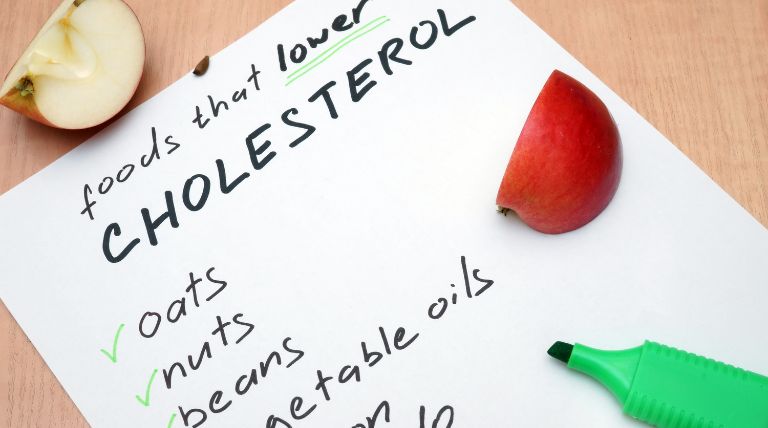
Diet is one of the most direct ways to influence LDL. The challenge for Singaporeans is that many beloved local dishes are high in saturated fat — the primary dietary driver of elevated LDL. This is not about giving up hawker food, but about making smarter choices within a food culture you already enjoy.
Local Foods That Raise LDL
Saturated fat prompts your liver to produce more LDL. In the local diet, the biggest sources include coconut milk (laksa, nasi lemak, curries), palm oil (the default frying oil at many stalls), and fatty roasted or fried meats like sio bak and char kway teow fried in lard. Cooking oil is such a significant contributor that MOH is extending mandatory Nutri-Grade labels to cover saturated fat content in cooking oils and sauces from mid-2027.
Heart-Healthy Swaps That Still Taste Like Home
- Switch your grain. Replace white rice with brown rice or oat-blended rice. Oats are rich in beta-glucan, a soluble fibre that binds cholesterol in the gut and helps lower LDL levels.
- Opt for broth-based dishes instead of coconut milk–based ones. Coconut milk is high in saturated fat, which can raise LDL cholesterol. Clear-broth options such as sliced fish bee hoon, yong tau foo (choose boiled over fried items), or assam-style curries are generally lower in saturated fat and therefore more heart-friendly. That said, preparation matters. Some versions may include evaporated milk or generous amounts of oil. And while broth-based dishes are lower in saturated fat, they can still be high in sodium. So go easy on the soup and sauces when possible.
- Eat more oily fish. Omega-3s in batang (Spanish mackerel), salmon, and tenggiri raise HDL and lower triglycerides. Aim for two to three servings weekly.
- Snack smarter. Swap fried snacks such as curry puffs and goreng pisang for unsalted nuts like almonds, walnuts, or pistachios — they contain plant sterols that help lower LDL cholesterol. You can also have fresh fruit for fiber and heart-healthy nutrients as a lower-fat alternative to fried snacks.
- Ask for less oil. Most hawker stall owners will accommodate. It is a simple request that removes a meaningful amount of saturated fat from a single meal.
When grocery shopping, look for the Healthier Choice Symbol (HCS) on cooking oils, sauces, and dairy. It identifies products that meet nutrient guidelines such as lower saturated fat, sugar, or sodium compared with similar items, making it easier to choose options that better support heart health.
Once expanded Nutri-Grade labels arrive in mid-2027, identifying lower-fat products will become even easier.
How Does Weight Loss Help Lower Cholesterol?

Excess weight, particularly visceral fat stored deep around the abdomen, makes it harder for the body to regulate cholesterol effectively. This type of fat is metabolically active and contributes to insulin resistance and increased production of lipoproteins that eventually raise LDL levels in the bloodstream.
Importantly, visceral fat is considered an independent cardiovascular risk factor. Even if your overall body mass index (BMI) is not very high, excess abdominal fat is linked to higher LDL and triglyceride levels because it disrupts normal lipid metabolism in the liver.
The encouraging news is that significant improvement does not require dramatic weight loss. Research consistently shows that losing just 5–10% of total body weight can lead to measurable reductions in LDL and triglycerides, along with improvements in HDL. For someone weighing 80 kg, this translates to just 4 to 8 kg — a realistic and achievable target with the right support.
The Health Promotion Board recommends at least 150 minutes of moderate-intensity exercise per week to support cardiovascular health. However, many individuals find it difficult to sustain these habits without structure and accountability.
This is where a structured weight management programme differs from simply dieting. Rather than focusing only on calorie restriction, a comprehensive approach addresses nutrition quality, physical activity, and behavioural habits together, increasing the likelihood of lasting cholesterol improvement and long-term heart health.
What If My Cholesterol Is High Despite a Healthy Lifestyle?
Some people eat well and exercise regularly, yet still have stubbornly high LDL cholesterol. One possible cause is a genetic condition called Familial Hypercholesterolaemia (FH). FH affects how the body processes LDL (“bad”) cholesterol. In Singapore, an estimated 1 in 140 people carry a genetic mutation linked to FH, and many affected individuals aren’t aware they have it until they develop high cholesterol or cardiovascular disease.
FH significantly increases the risk of early heart disease, up to 20 times higher than the general population if left untreated.
To help with early detection and treatment, the Ministry of Health launched a National FH Genetic Testing Programme in June 2025. Under this programme, Singapore citizens and permanent residents with very high LDL-C levels (≥ 5.5 mmol/L) can be referred by their GP to a Genomic Assessment Centre for subsidised genetic testing. Eligible patients may receive up to 70 % off the cost of the test, counselling, and related services, and can use schemes such as MediSave to further offset expenses.
A positive FH diagnosis doesn’t mean lifestyle changes no longer matter. Diet, exercise, and other healthy habits are still essential alongside medication when needed. The benefit of genetic testing is that it helps ensure you get the right treatment intensity early, rather than delaying appropriate care.
If you have a family history of early heart disease or very high LDL levels, talk to your GP about whether you should be referred for FH evaluation and testing.
Frequently Asked Questions
Are eggs bad for your cholesterol?
For most people, eating eggs in moderation does not significantly raise LDL (“bad”) cholesterol. While eggs do contain some saturated fat (about 1.5 g per large egg), this is relatively low compared with common spreads and cooking fats.
For example, in a typical Singaporean breakfast like kaya toast with butter, the butter and coconut jam contribute more saturated fat than the egg itself, making the egg a minor contributor to LDL increase.
Eggs also provide high-quality protein, vitamins, and minerals, making them a nutritious choice as part of a balanced diet.
How quickly can you lower cholesterol?
Cholesterol levels can begin improving within 2–4 weeks of making meaningful dietary changes. However, most people see clearer and more measurable reductions after 8–12 weeks of consistent effort.
The speed of improvement depends on the extent of changes made on:
- Reducing intake of saturated fat
- Increasing soluble fibre intake
- Losing weight (especially abdominal fat)
More intensive and consistent changes generally lead to faster results. However, genetics also play a role. Some individuals may require medication alongside lifestyle adjustments to reach target LDL levels.
Even modest improvements within a few months can significantly reduce long-term cardiovascular risk.
What is the best breakfast to lower cholesterol?
A cholesterol-friendly breakfast focuses on soluble fibre and healthy fats while limiting saturated fat. Oatmeal is one of the most recommended options. The beta-glucan in oats binds to cholesterol in the digestive tract and helps remove it from the body.
Pair it with fresh fruit, a handful of nuts, or ground flaxseed for added benefit. If you prefer something savoury, wholemeal toast with avocado or a soft-boiled egg is a solid choice.
The key is reducing saturated fat from accompaniments like butter and full-fat spreads, which tend to contribute more to LDL than the main dish itself.
What is the best drink to lower cholesterol?
The drinks most consistently linked to heart health are plain water and green tea. Green tea contains compounds called catechins, which studies suggest can modestly reduce LDL (“bad”) cholesterol.
It’s best to avoid sugar-sweetened beverages, as they can contribute to weight gain and worsen your cholesterol and triglyceride levels.
What supplements help lower cholesterol?
Some supplements have shown modest benefits for cholesterol management, but they are not a substitute for dietary and lifestyle changes.
Plant sterol and stanol supplements (also found naturally in nuts and certain fortified foods) can help reduce LDL absorption in the gut. Fish oil supplements may help lower triglycerides, though their direct effect on LDL is limited.
Soluble fibre supplements like psyllium husk can also support LDL reduction when taken consistently. Always check with your doctor before starting any supplement, especially if you are already on cholesterol-lowering medication, as some supplements can interact with prescribed treatments.
Take the Next Step Toward Better Health
Lowering LDL cholesterol works best when it’s part of sustainable lifestyle habits, rather than quick fixes that are hard to maintain. Consistent dietary improvements, regular physical activity, and structured weight management can help many people achieve healthier cholesterol levels and improve overall heart and metabolic health.
Building these habits not only supports cholesterol, but also helps with blood pressure, blood sugar, and long-term cardiovascular risk.
Consider working with a qualified healthcare professional or structured wellness programme to create a personalised plan you can realistically follow. Small, consistent changes can make a meaningful difference over time. Your heart will thank you for it.