


That post-holiday struggle with the weighing scale is all too familiar. Research shows that, on average, the average weight gain of adults during festive periods is 0.37 kilograms.
Over the years, these small gains accumulate and could significantly contribute to long-term weight increase.
The good news is that you don’t need to skip celebrations or survive on salad while everyone else enjoys the feast. With the right approach, you can fully participate in festivities while keeping your weight in check.
Why We Gain Weight During Festivities
Holiday weight gain is not only about eating more than we do on non-holidays. There are also other factors (biological and environmental) that play a part in this phenomenon.
Our sleep patterns get disrupted by late-night gatherings and altered schedules. When we are sleep-deprived, our bodies produce more ghrelin (the hunger hormone) and less leptin (the satiety hormone), making us crave high-calorie foods.
Stress plays a major role too. Between preparing for celebrations, managing family dynamics, and financial pressures, our cortisol (a hormone released in response to stress) levels spike. Cortisol increases appetite, causing us to eat more than our bodies need.
Environmental triggers surround us constantly during festive seasons. In Singapore, we navigate multiple celebrations throughout the year, each bringing its own array of traditional calorie-dense foods.
The accessibility of festive treats at home, the office, and social gatherings creates constant temptation, which makes it challenging to maintain normal eating patterns.
The Most Powerful Strategy: Daily Self-Monitoring

A 2019 study discovered that participants who weighed themselves daily and viewed the daily graph of their weight (they were called the DSW + GF group) during the holiday season prevented weight gain, while the control group gained about 2.65 kg between Thanksgiving and New Year’s Day.
Fourteen weeks after New Year’s Day, the control group had lost about 1.14 kg, but they still retained more than half of the weight they had gained over the holidays. Overall, from pre-holiday to the follow-up period, the control group remained about 1.51 kg heavier than the DSW + GF group.
This simple act of stepping on the scale each morning increased awareness and enabled early course correction.
The key is implementing this correctly. Weigh yourself first thing in the morning, after using the bathroom, and before eating. Track the trend over time instead of stressing over daily fluctuations.
Your weight can vary by 1-2 kilograms due to water retention, which is why you should focus on the weekly average.
Start Your Day Right
Why Protein Matters
Starting your day with adequate protein sets the tone for better eating decisions throughout the day.
Research suggests that 30 g of protein intake for breakfast increases satiety sensation in the hours after breakfast, which can last into the evening. This definitely helps prevent late-night snacking.
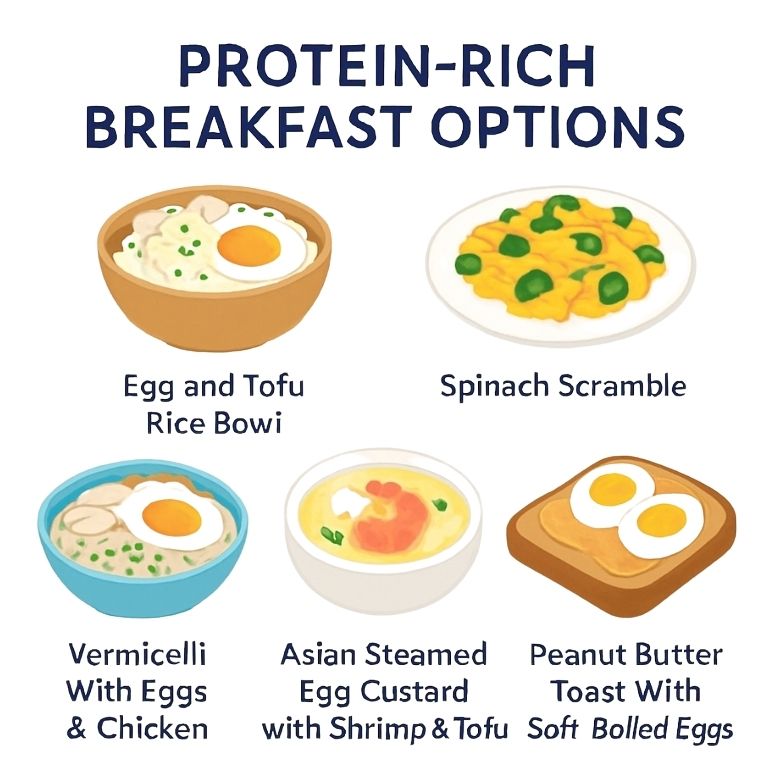
Your protein–rich breakfast options are plentiful:
- Egg and Tofu Rice Bowl → combine half a block of firm tofu (cubed), one sunny side egg, and ¾ cup cooked rice, with greens and seasoning.
- Spinach Scramble → scramble three eggs with ¼ cup cottage cheese and spinach, cooked in olive oil.
- Vermicelli With Eggs & Chicken → replace mee goreng with brown rice vermicelli, add two boiled eggs, a side of spinach, and grilled chicken breast.
- Asian Steamed Egg Custard with Shrimp & Tofu → steam two eggs with 100g silken tofu and 4oz chopped shrimp, seasoned with soy sauce and sesame oil.
- Peanut Butter Toast With Soft-Boiled Eggs → two slices wholemeal bread with 2 tbsp peanut butter and two soft-boiled eggs, add a sugar-free coffee or soy milk.
These choices keep you satisfied longer than typical high-carbohydrate breakfasts.
Master the Art of Mindful Eating
Mindful eating transforms your relationship with food without requiring restriction or deprivation. Our comprehensive guide to mindful eating provides detailed techniques, but here are the essential practices for the festive season.
Slow Down and Savour
Your brain needs approximately 20 minutes to register fullness signals from your stomach. Those who eat more quickly tend to feel less satisfied than those who eat mindfully and, consequently, tend to eat more.
Practice the chewing technique. Aim for 20-30 chews per bite. Not only does this slow down your eating pace, but it also improves digestion and allows you to truly taste your food. Put your utensils down between bites and engage in conversation.
Cognitive distractions (e.g., watching TV, scrolling through phones, and working) during meals can increase your food intake. So while eating, it’s best to eliminate these distractions and focus on eating.
Engage Your Senses
Before eating, take a moment to appreciate your food. Use your senses to explore the vibrant colours of your plate (your eyes), smell the aromatic spices (your nose), feel the textures, and savour the complex flavours (your mouth). As you engage your senses, you tend to eat more slowly and be easily satisfied with smaller portions.
Learn to distinguish true hunger from emotional eating. When cravings strike, practice the Delay-Distract-Substitute approach:
- Delay eating for a few minutes
- Distract yourself with an activity
- And if you are still hungry, substitute with a healthier food option
Smart Portion Control Without Counting Calories
The Plate Method
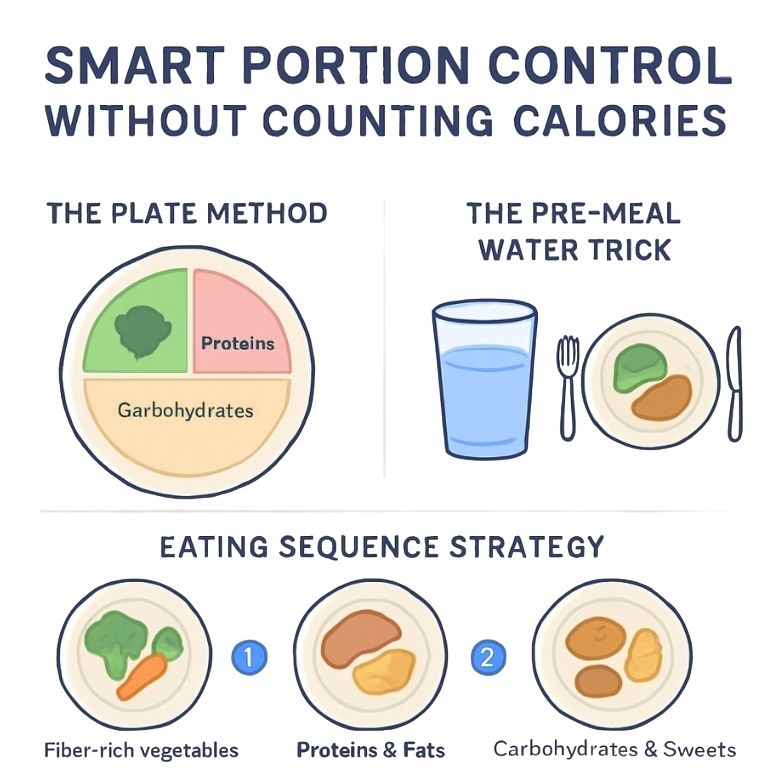
This is a visual tool that serves as a guide for creating healthy, balanced meals.
Fill half of your plate with non-starchy vegetables like leafy greens, cucumber, and/or tomatoes.
Dedicate a quarter to lean protein such as grilled chicken, fish, or tofu.
The remaining quarter goes to whole grains or starchy foods like brown rice or sweet potato. Add a small serving of healthy fats like nuts or avocado.
The Pre-Meal Water Trick
Our stomach has nerves that sense gastric distension (stretch) whenever a food is consumed and send fullness signals to the brain. Drinking water before a meal could trigger similar signals.
You can drink up to half a litre of water 30 minutes before meals to reduce food intake without consciously restricting yourself.
Eating Sequence Strategy
The order in which you eat affects blood sugar response and total consumption.
(1) Fibre-rich vegetables → (2) Proteins and Fats → (3) Carbohydrates and Sweets
Starting with vegetables slows digestion and carbohydrate absorption, helping to release glucose steadily into the bloodstream and increasing satiety. Proteins and fats further slow digestion, enhancing this effect. Saving carbohydrates for last allows the fibre, protein, and fat to act as a buffer, reducing post-meal blood sugar spikes and helping prevent overeating.
Navigate Festive Foods
During Chinese New Year, enjoy yu sheng by loading up on the veggies and using less plum sauce. Choose steamed items over fried options, and limit Chinese New Year goodies such as pineapple tarts and bak kwa to a few pieces. Savour slowly instead of munching mindlessly.
For Hari Raya, fill your plate with sayur lodeh and rendang vegetables before adding ketupat. Enjoy traditional kueh in moderation; share pieces with your family instead of consuming whole portions alone.
During Deepavali, sweets bought from stores are usually loaded with sugar and preservatives, so it’s recommended to make them yourself. Substitute ingredients with healthier options. For example, you can mix in dried figs to reduce processed sugar in traditional sweets. Swap all-purpose flour for whole-wheat flour to make your family recipes more nutritious.
At Christmas, load up on roasted vegetables and salads before approaching the roast meats. Choose one dessert that you can really enjoy, instead of sampling everything. Lastly, alternate alcoholic drinks with water or sparkling water with lemon.
Manage Holiday Triggers
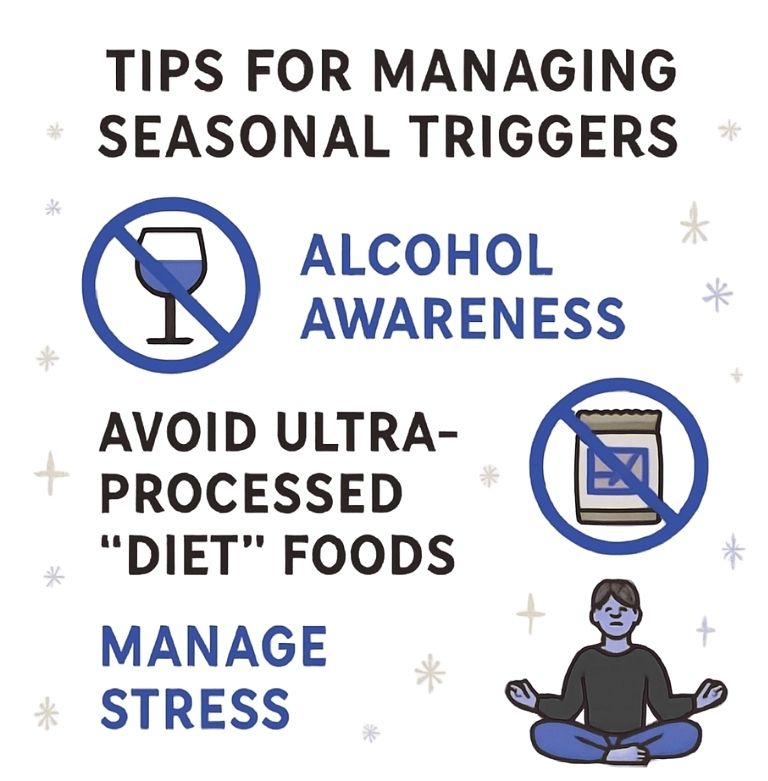
Here are several tips that can help many people manage seasonal triggers that the holiday season may bring.
Alcohol Awareness
Alcohol provides empty calories and makes people less cautious about food choices. Experts recommend finding healthy alternatives to hard drinks. If this is unavoidable, set a limit before events and never drink on an empty stomach.
It’s important that you also know how to set boundaries with pushy friends or family members.
Avoid Ultra-Processed “Diet” Foods
Counterintuitively, many ‘diet’ or ‘low-fat’ festive products can sabotage weight management efforts.
These alternatives usually contain high levels of unhealthy ingredients such as refined starches, salt, sugar, and artificial sweeteners, and often have little nutritional value. Choose smaller portions of traditional foods that you love over large quantities of unsatisfying substitutes.
Manage Stress
Before you turn to food for comfort, perform stress-reduction techniques. You can do any of the following:
- Mindfulness and deep breathing
- Abdominal breathing
- Box breathing
- Squeegee Breath
- Physical activity (choose the one that you love doing)
- Distraction activities (i.e., creative outlets such as drawing or playing music, mental engagement through games or puzzles)
- Connect with others (social contact is stress-relieving)
- Minimise screen time to give your brain and body a break, improve sleep, enhance mindfulness, and reduce stress triggers
Stay Active During the Busy Season
Even just a few minutes of doing moderate-intensity physical activity can be beneficial to your health (i.e., excellent sleep quality and reduced anxiety).
Here is a short list of effective tips to stay active during the holidays.
- Park farther away and briskly walk to your destination.
- Take the stairs when opportunities arise.
- When you are with friends or family, invite them for a group walk, or initiate any activity that involves getting physically active.
- Schedule quick workouts (around 10-15 minutes) using HIIT or bodyweight exercises.
- Try active breaks. Stand up, stretch, or do a few jumping jacks during TV or work breaks.
Note: While staying active, remember to stay properly hydrated. Water is essential, especially as you lose fluids through sweat and breath, helping your body perform at its best.
Prioritise Getting Adequate Rest At Night
Our routine during the holidays compared to normal days is often different. However, it’s crucial to maintain healthy sleep habits because it:
- Helps repair body tissues
- Improves our mood
- Reduces stress, which helps regulate appetite and prevents stress-related cravings for high-calorie foods
- Boosts energy levels, making it easier to stay physically active
- Supports healthy metabolism and decision-making, helping prevent overeating
You can also take short naps whenever you have time for a quick recharge.
Conclusion
This holiday season is an opportunity for us to build a positive relationship with food — by staying mindful even as we celebrate.
To avoid holiday weight gain, you don’t have to apply every strategy at once. Start with the ones that feel most realistic for your routine, then build from there as you go through the season. The goal is to stay in control without missing out on the joy that holidays bring.
If you’re exploring an effective weight loss program that can support you through holiday celebrations and beyond, Eureka Wellness is here to help. We’d be happy to understand your goals and guide you toward a plan that fits your lifestyle.